November 3, 2026 · Well Dealt
Planting a Complete Homestead Garden: Grow the Right Foods for Eating, Storage, and Self-Sufficiency
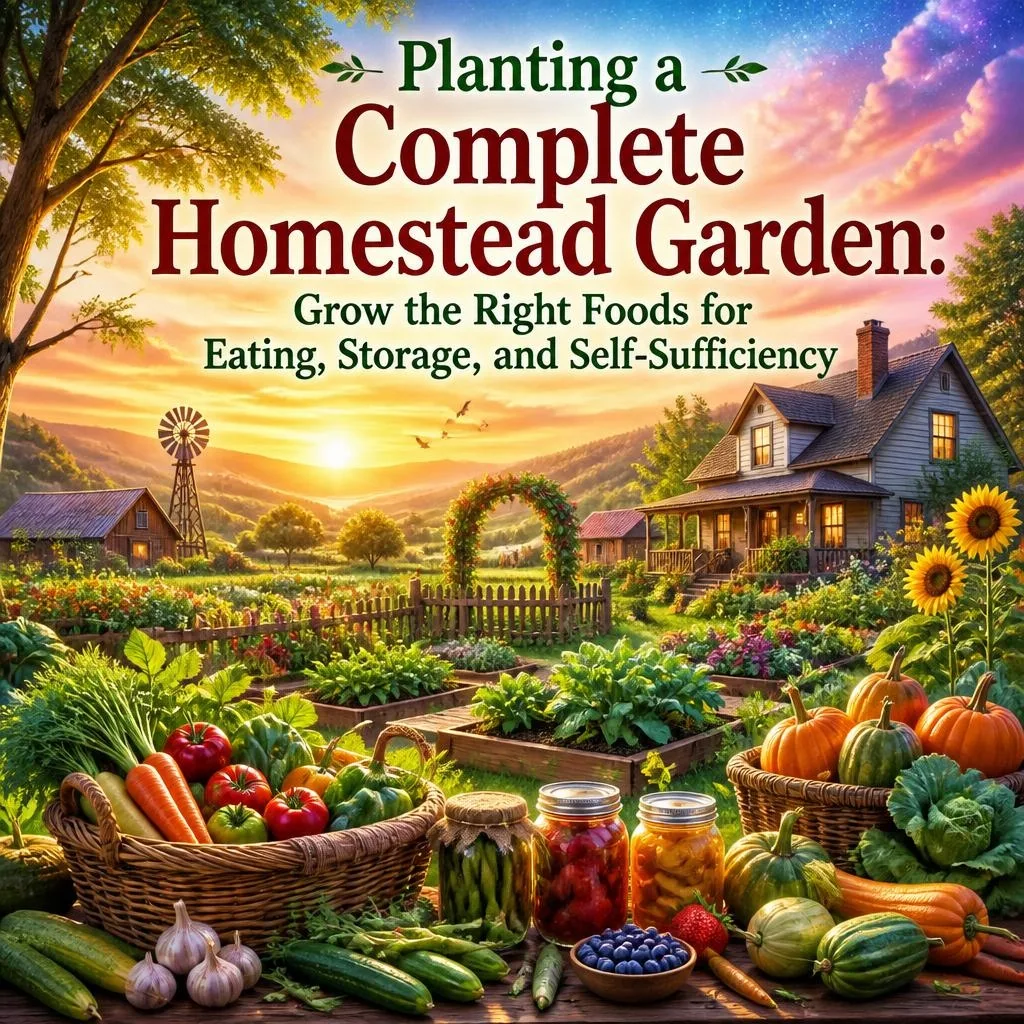
A successful homestead garden is about more than planting vegetables. It's about growing the right combination of foods to feed your household, preserve for winter, store long-term, and produce year after year. Whether you're starting a backyard garden or developing several acres of off-grid land, planning your garden around how you will actually use the food is essential to becoming more self-sufficient.
The goal is to create a productive food garden that provides fresh vegetables, fruits, herbs, staple crops, and a dependable harvest throughout the growing season.
1. Start With the Foods Your Household Actually Eats
Before purchasing seeds or preparing garden beds, think about what your household eats regularly. Consider the vegetables you use for everyday meals, the fruits you enjoy, the ingredients you frequently purchase, and the foods you would like to preserve for later. Growing foods your family already enjoys makes gardening more practical and reduces waste.
Plan your garden around several purposes: fresh eating, cooking, food preservation, long-term storage, and seed saving. Instead of planting large quantities of one vegetable, grow a variety of foods that can be used in soups, salads, sauces, casseroles, side dishes, and complete meals.
2. Grow Vegetables for Everyday Meals
Start with dependable vegetables that provide ingredients for a wide variety of meals. Tomatoes, peppers, onions, and garlic are particularly useful because they can be incorporated into sauces, soups, salsa, casseroles, and countless everyday recipes. Carrots, lettuce, spinach, broccoli, cabbage, cucumbers, zucchini, and green beans provide additional variety and nutrition.
Consider growing multiple varieties of tomatoes for fresh eating, sauces, and canning. Plant different peppers for cooking, stuffing, drying, and freezing. Grow onions and garlic for everyday seasoning, and include cabbage and cucumbers for fermenting and pickling.
Choose vegetables that produce consistently in your climate, and stagger planting dates when possible so you aren't harvesting everything at once.
3. Plant Staple Foods for Long-Term Self-Sufficiency
A truly productive homestead garden should include crops that provide calories, carbohydrates, and filling meals. Potatoes, sweet potatoes, dry beans, winter squash, corn, and peas are excellent additions because they provide more than just fresh vegetables.
Potatoes and sweet potatoes are versatile foods that can be roasted, mashed, baked, or incorporated into soups and casseroles. Dry beans provide protein and fiber while offering excellent long-term storage when properly dried. Winter squash can be stored for extended periods under suitable conditions and used in soups, baked dishes, and side meals.
Corn can be eaten fresh, dried, ground, or used as animal feed where appropriate. Sunflowers provide edible seeds and can contribute to poultry feed. These crops help turn your garden into a dependable food source rather than simply a seasonal vegetable patch.
4. Establish Fruit Trees and Perennial Food Sources
Fruit trees and perennial crops are some of the most valuable long-term investments you can make on a homestead. Unlike annual vegetables that need to be replanted each year, established fruit trees and perennial plants can provide harvests for many seasons.
Consider planting apple, pear, peach, plum, fig, and persimmon trees where suitable for your climate. Establish berry patches with blueberries, raspberries, blackberries, and strawberries. Grapes and other climbing fruit crops can also provide productive use of available space.
Perennial vegetables such as asparagus and rhubarb are excellent additions because they return year after year once established. Choose fruit varieties based on local climate, chill-hour requirements, available water, and soil conditions. Planting early-, mid-, and late-season varieties can extend the period when fresh fruit is available.
5. Create a Dedicated Herb Garden
Herbs are some of the easiest and most useful plants to incorporate into a homestead. A dedicated herb garden provides fresh ingredients for cooking while allowing you to dry and store herbs for use throughout the year.
Basil, rosemary, thyme, oregano, parsley, cilantro, sage, dill, chives, and mint are excellent culinary choices. Chamomile, lemon balm, calendula, lavender, and echinacea are also popular traditional garden plants.
Harvest herbs throughout the growing season, then dry and store them in labeled airtight containers. Learn proper plant identification and safe preparation, particularly when growing herbs traditionally used for wellness. Herbal preparations should not replace appropriate medical care.
6. Plant Specifically for Food Preservation
One of the greatest advantages of growing your own food is being able to preserve the harvest for months when the garden is no longer producing. Plan your crops according to how you intend to store and use them.
Tomatoes, beans, carrots, and fruits can be preserved through appropriate canning methods. Berries, peppers, broccoli, and corn are excellent candidates for freezing. Herbs, tomatoes, peppers, and fruits can be dehydrated for longer storage. Cucumbers and cabbage are popular choices for pickling and fermentation.
Potatoes, carrots, beets, and winter squash can provide valuable stored food when harvested and kept under appropriate conditions. Dry beans, corn, and sunflower seeds can also be stored for extended periods when properly dried and protected from moisture and pests.
Invest in quality canning equipment, a dehydrator, freezer storage, fermentation supplies, and food-safe storage containers. Always follow tested food-preservation procedures. Low-acid vegetables generally require pressure canning rather than water-bath canning.
7. Design Your Garden for Efficiency and Water Conservation
A well-designed garden saves time, water, and maintenance while improving productivity. Organize your planting areas according to sunlight, soil conditions, watering requirements, and how frequently you harvest each crop.
Raised beds work well for organized vegetable production, while larger in-ground planting areas are useful for potatoes, corn, beans, and other staple crops. Trellises can support climbing beans, peas, and cucumbers while making better use of vertical space.
Install drip irrigation to reduce water waste and deliver moisture directly to plant roots. Use mulch to help retain soil moisture, suppress weeds, and regulate soil temperatures. Establish a composting area to turn suitable kitchen scraps, leaves, and garden waste into valuable soil amendments.
If you're developing an off-grid property, consider connecting your garden irrigation system to an appropriately designed rainwater storage system, while ensuring the water is suitable for its intended use.
8. Plan Around Your Climate and Growing Season
Your climate determines what will grow successfully and when you should plant. Before purchasing seeds, identify your USDA growing zone, average frost dates, summer temperatures, and seasonal rainfall.
For warmer regions such as California's Central Valley, fall and winter are excellent opportunities for growing broccoli, cabbage, carrots, lettuce, spinach, peas, and other cool-season crops. Spring and summer are better suited for tomatoes, peppers, beans, squash, melons, and other heat-loving vegetables.
Extreme summer heat can damage plants and reduce production, so plan for shade cloth, consistent irrigation, and appropriate planting schedules. Test your soil before planting and choose varieties suited to your specific conditions.
A greenhouse or high tunnel can help extend the growing season and provide a protected environment for starting seeds and growing certain crops.
9. Save Seeds and Build a Garden That Keeps Producing
Learning to save seeds is an important step toward long-term food independence. Select healthy, productive plants from suitable open-pollinated or heirloom varieties and learn how to properly collect, dry, label, and store their seeds.
Keep in mind that hybrid seeds may not reproduce true to type, and some plants require special pollination or isolation practices to maintain a particular variety.
Maintain a garden journal documenting planting dates, seed varieties, harvest quantities, weather conditions, and successful growing methods. Over time, this information will help you determine which plants produce the most food with the least amount of water, space, and maintenance.
As your garden becomes established, expand into additional varieties, perennial food crops, and larger staple-food planting areas.
Final Thoughts: Grow Food With a Purpose
A complete homestead garden should provide more than seasonal vegetables. It should supply everyday meals, staple foods, fruits, herbs, and preserved harvests that help sustain your household throughout the year.
Start with the foods you eat most, prioritize crops that store well, establish perennial fruit sources, and expand your garden as you gain experience. Learn to preserve your harvest, save seeds, build healthy soil, and conserve water.
The goal is to create a productive garden that becomes more established and dependable with every growing season.
Plant for your table. Grow for your pantry. Preserve for the winter. Build a garden that supports your independence year after year.