Well Dealt's pick · Updated November 2026
BLUETTI EB3A Solar Generator with PV200 Solar Panel
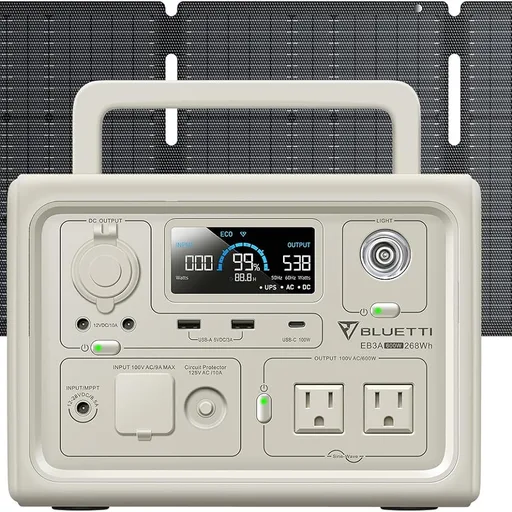

A compact solar generator like this may suit campers, van travelers, and anyone who wants a small backup power source for lights, phones, tablets, or other low-to-moderate demand devices. The included PV200 panel makes it a more complete starter package than a power station sold on its own, especially for someone who wants to test solar charging without piecing together separate parts.
The main appeal is the size-to-capability balance. A 268Wh battery is not meant to run a whole house, but it can be a practical fit for short trips, tailgating, light emergency use, or charging gear when grid power is limited. The two AC outlets and the 600W output rating suggest a product aimed at everyday portable needs rather than heavy appliances. That matters, because buyers in this category often overestimate what a small station can do and then end up disappointed by the first high-draw device they try.
LiFePO4 chemistry is another point that may matter to cautious buyers. It is commonly chosen for longer cycle life and more stable battery behavior than older lithium-ion setups, so it is worth paying attention to if durability is part of the buying decision. Even so, the real question is whether this size is enough for the load you plan to carry. A reader should check the wattage of the devices they want to run, not just the headline output number, because startup draw and sustained draw are not always the same thing.
The solar panel inclusion is useful only if the panel itself matches the way it will be used. A panel can look convenient in a listing and still be awkward in practice if the user expects quick charging in poor sun, flexible placement in tight campsites, or a setup that packs down very small. It is worth confirming the panel dimensions, cable length, and charging expectations before buying. Those are the sorts of details that determine whether a bundle feels ready to use or merely complete on paper.
Who this is for comes down to modest needs and a preference for portability. Someone building a first emergency kit, someone keeping a small backup for a camper van, or someone who wants solar charging for weekend use may find this format sensible. Someone trying to power larger cooking appliances, run tools, or cover longer off-grid stretches should look more closely at capacity and output before assuming this size will be enough.
The strongest evidence here is the product specification itself, so the right way to judge it is by matching the listed capacity, output, and panel setup to the gear you actually plan to use. That makes this less of a general purpose backup and more of a targeted portable power option. If your needs are light and portability matters more than long runtime, it could be a good fit. If you need broader backup coverage, it is worth comparing larger stations before settling on this one.
Some Amazon links are affiliate links. Well Dealt may earn a commission from qualifying purchases at no extra cost to you. As an Amazon Associate I earn from qualifying purchases.
See current price